

5mm brake pads wholesale in china — Use this purchasing topic to prepare an evidence-based inquiry. The checks below concern supplier comparison and order control; they do not confirm a particular vehicle application, current stock, a selling price or factory ownership.
Control review: Review supplier performance with comparable records
Step 1
Frame this activity as a gated purchasing decision: evaluate execution across identification, communication, change control, packing, readiness and discrepancy handling. Assemble order-level facts, response dates, documented exceptions, receiving findings, corrective actions and unresolved obligations, then write a one-sentence decision question for the responsible reviewer. Keep discovery terms, seller descriptions and verified identifiers in different fields. Photographs and catalogue pages may guide investigation, but neither replaces dimensional, electrical, application or revision evidence where those details matter. No commercial ranking should begin until the expected supply boundary and the unresolved identification points are visible to everyone comparing the offers.
Step 2
Run a short pre-mortem. The credible breakdown is that one successful delivery or one serious complaint can distort judgment when it is detached from product scope and transaction evidence. Identify the earliest record that would reveal it and the person able to stop progression. Request support that refers to the quoted version, not merely to a product family. Record silence and ambiguity as open status rather than interpreting them as agreement. This approach avoids accusatory language while protecting the purchase: the supplier can correct the proposal, and the buyer can see exactly which conclusion has evidence and which remains conditional.
Step 3
Normalize the offers without stripping away their differences. The comparison rule is that compare performance over relevant orders and distinguish supplier-caused issues from buyer selection or logistics problems. Separate primary offers, alternatives and optional services; preserve currency, quantity basis, delivery basis and validity. Use notes for genuine qualification, not to hide a mismatch in the main columns. If two options cannot yet be compared fairly, state the missing input and postpone the ranking. A transparent provisional comparison is more useful than a precise score built from inconsistent units or unsupported technical equivalence.
Step 4
Move from preference to authorization by applying one explicit safeguard: define review triggers and required improvements without converting a score into a permanent guarantee for all future products. Reference the exact revision in the purchase order and obtain acknowledgement against that revision. Route technical, commercial and packaging changes to the roles that own them. Where an exception is accepted, define its affected quantity and duration. A controlled exception should not become the default for a repeat order merely because it appears in the previous correspondence. Every operational team needs access to the approved version and the same exception list.
Step 5
Before release, sample the transaction trail from both directions. Start with an order line and locate its support, package identity and inspection status; then start with a carton label and recover the approved order line. Resolve missing links, confirm quantities and hold any line whose identity or disposition is unclear. The exercise supplements, rather than replaces, suitable inspection. It is designed to stop administrative momentum from carrying a technically uncertain item into available inventory or customer-facing descriptions.
Step 6
Close the gate only when use the review to adjust evidence, inspection and order controls while preserving a fair record of both resolved and repeated issues. Write a concise completion note covering delivered scope, approved deviations, remaining obligations and the evidence retained. If the outcome exposes a weak requirement, revise the requirement through normal approval rather than rewriting the history. Feed recurring issues into supplier review and future inquiry templates. A mature process does not pretend uncertainty never occurred; it makes uncertainty findable, assigns it, and prevents it from being silently copied into the next quotation.
Braking components
- Exact component type and scope: pad, disc, caliper, hose or related hardware are not interchangeable descriptions.
- Applicable mounting and dimensional references, vehicle equipment and installation position where relevant.
- Included fittings and condition; assessment against appropriate specifications by qualified personnel for safety-relevant use.
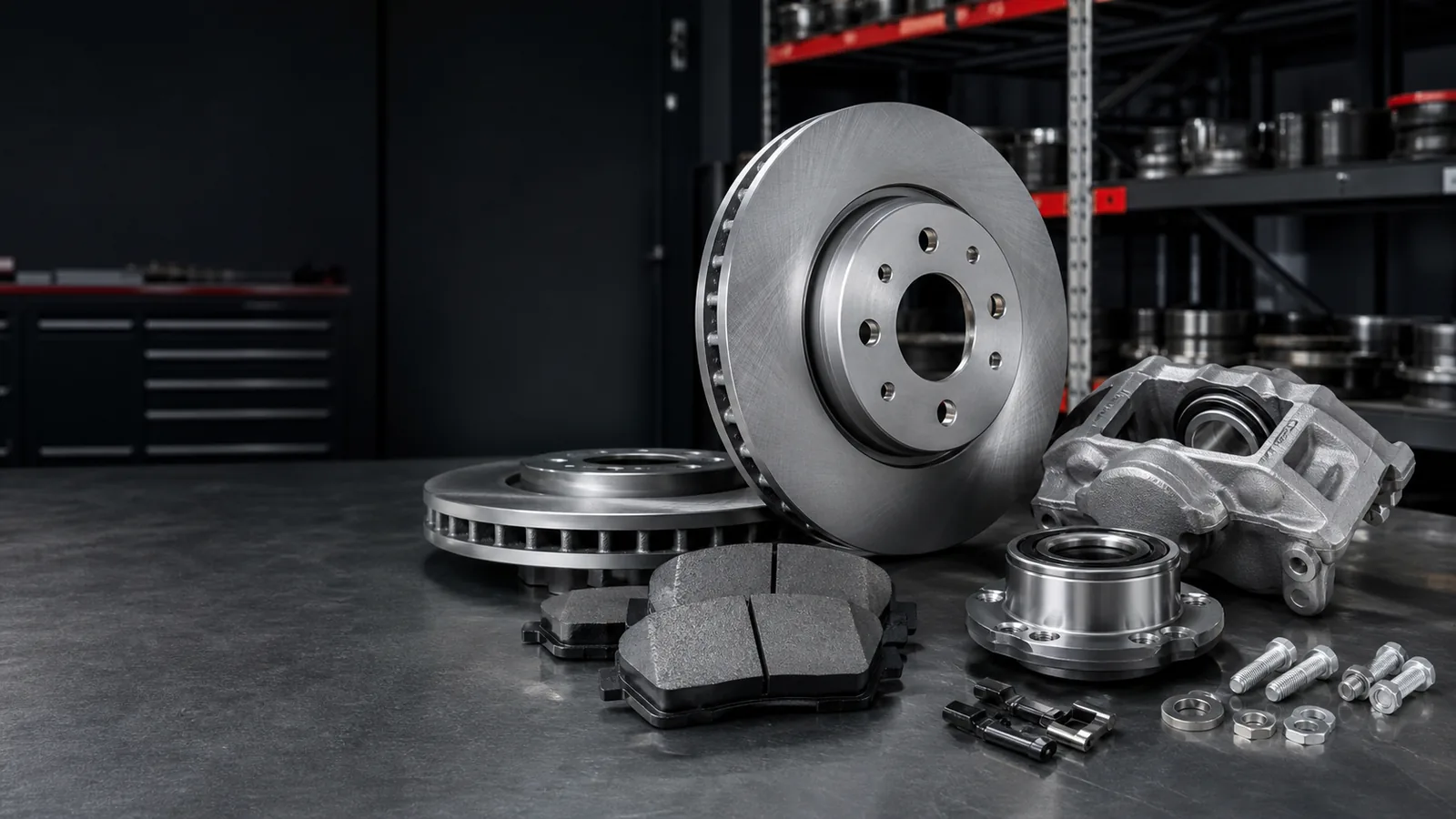
Reference image for the product category; it is not evidence of an exact offered version or vehicle compatibility.
Information to include in the inquiry
| Item | Evidence to request |
|---|---|
| Product identification | Provide the exact requested component and available markings. Keep buyer and supplier codes separate, preserve suffixes, and identify uncertain references instead of silently correcting them. |
| Application evidence | Supply available vehicle identification, equipment details and clear interface photographs when relevant. This purchasing guide does not establish compatibility for a particular vehicle or replace qualified technical confirmation. |
| Scope and quantity | Specify pieces, pairs, sets or cartons and list required accessories. Ask the supplier to identify exclusions so the approved price and delivered contents refer to the same scope. |
| Commercial offer | Request a current written quotation with currency, validity, delivery basis and separately agreed charges. Prices, availability, minimum quantities and shipment timing remain subject to the actual confirmed offer. |
| Acceptance and records | Agree relevant inspection evidence, package identification and the procedure for discrepancies. Retain the approved revision and supporting records so receiving and repeat orders can use the same reference. |
Request a purchasing quotation
- Provide available application evidence, exact markings and photographs without inventing missing fitment information.
- Separate required features from preferences and ask sellers to identify deviations or alternatives explicitly.
- State quantities, destination and requested timing, then obtain a written offer with clear scope and unresolved questions.
Mixed-order checklist
Keep each stock code and quantity basis distinct, reconcile alternatives line by line and require a packing list that identifies mixed-carton contents.
Questions before ordering
Does a keyword or catalogue photo confirm fitment?
No. Use the search phrase to begin the inquiry, then verify the actual component and application. Similar wording or appearance does not establish matching interfaces, calibration or equipment compatibility.
Can a price be compared before the specification is complete?
Only provisionally. Identify the unit, included items and unconfirmed requirements first. Request a revised quotation when the scope changes, and keep unknown transport or destination costs separate from confirmed amounts.
Does this guide confirm stock or factory ownership?
No. Availability, supply role and manufacturing claims require current seller-specific evidence. Request those details directly and distinguish verified information from statements that remain unconfirmed.